How do you remove the subject from their own story

You write a headline like this: Driving dad delivers baby on the Gardiner.

A man and his wife are in a parked car pulled over on the side of the road waiting for the ambulance to arrive. She is in labour:

as his wife, Zubine Khambatta, screamed in pain in the front seat of the car, time ran out.
“I told her to push at the next contraction and that’s when it hit me,” said Sivasankaran. “I was going to deliver a baby.”

Let us clarify something here. Sivasankaran did NOT deliver the baby. When Sivasankaran realized that he and his wife were not going to make it to the hospital on time he called 911. The operator talked gave him instructions over the phone as to what to do. So, yes, Sivasankaran assisted his wife but SHE delivered the baby. The 911 operator deserves an assist. Sivasankaran was there. He was more involved in the birth of his child than are many men. But it isn\’t his name that should be in the headlines.

An appetitite for books

Sometimes the best way to describe a book is to liken it to a meal. There are books that leave you replete to the point of sleepiness. There are books that feel like a hefty meal as one is reading yet later leave the reader feeling empty. There are books that remind you of salty treats…..you keep saying to yourself \”just one more page, one more chapter,\” until the book is read (or the bowl is empty.)

And then there those other books—the ones that remind you of the dinner rolls and breadsticks placed in the middle of the table to distract the diner from slow service and mediocre cooking. If you eat the rolls the edge is taken off both your appetite and your palate.

I just finished a book like that.

Borrowed authority

As is true for most households in Canada and the United States seldom a week goes by that we don\’t get flyers in the mail. We generally check them out only as a way of finding out food prices at different stores without expending time/gasoline. However, this week one of the non-groceryflyers immediately caught my eye. \”Books\” I exclaimed, \”which bookstore has a sale going on?\” My excitement quickly died down when I realized that the flyer was from the local Christian bookstore and there was little chance that what they had on sale would be something that I wanted to buy.[1] However, there were a lot of pictures of books and a lot of descriptions of books so it was impossible to throw out the flyer until I had read it.

The first several books seemed to be typical examples of what I think of as \”soft, fuzzy\” Christian books but the next caught my attention. In The Coming Economic Armageddon: What Bible Prophecy Warns about the New Global Economy the author, David Jeremiah, writes,

\”As global financial earthquakes increase in frequency and intensity, many are beginning to wonder if we are on the threshold of Armageddon!\” [p. xi]

Correction–the author is, according to the cover of the book, Dr. David Jeremiah. I ponder for a moment the chance that the author of this book on the world\’s economy is either an economist or has a degree in international relations and then, of course, I google him. I find, not to my surprise that, David Jeremiah isn\’t an economist. More to the point it is a stretch to refer to him as Doctor. I can, quite legally and accurately put Dr. in front of my name. I do after all have a doctorate. However in the academic communities in which I studied, researched and taught one didn\’t use the honorific except in formal circumstances or when it was relevant. If David Jeremiah had earned a doctorate ( from an accredited degree granting institution) in some discipline not directly related to the subject of the book it would still be misleading and even academic bad manners to put Dr. on the front cover of the book. Note the word \”earned\” in the previous sentence. A little research makes it unlikely that Jeremiah actually \”earned\” a doctorate — what he apparently has is an honorary doctorate. According to Jeremiah\’s own website he has a BA, an MA (in theology) and

He completed additional graduate work at Grace University and was granted the Doctor of Divinity degree from Cedarville College[2] in 1981.[BIOGRAPHY OF DR. DAVID JEREMIAH]

I noticed, when I was living in the U.S. that many pastors are referred to and addressed as Dr. just as the ranking officer on a sea-going vessel is given the title Captain even if that is above hir actual rank. But only while they are onboard–when ashore the officer\’s actual rank is used to refer to and address them.

The rank of Captain, like the title Doctor has a contextual significance. On a ship someone is in charge. I have a doctorate in a particular discipline and my expertise in that area does not automatically bleed over into other areas of life. Thus even if Jeremiah had an earned (as opposed to an honourary) doctorate in divinity one could call into question its relevance on economics.

By the way, if the reader is wondering why the use of the title \”Dr.\” took me aback they can look at the practices of other authors. For example, Paul Krugman (Ph.D. from MIT) does not call himself Dr. Krugman on the front cover of The Return of Depression Economics and the Crisis of 2008, although he is billed as a Nobel Prize Winner in Economics which, since it is a book about economics, does seem contextually relevant. If you look at Capitalism and Freedom its author is listed simply as Milton Friedman. Neither men needed to \”borrow authority\” by including their academic titles in their names.

I imagine that Jeremiah (and his readers) would insist that his knowledge of the bible makes him better able to predict future economic conditions than a mere economist. Again I cry foul. There is no indication from his webstie or his educational resume that Jeremiah is a student of the languages in which the bible was originally written. Therefore he is making predictions on the basis of someone else\’s translations.

If you have ever spent time among highly trained translators (especially those who work with ancient documents) you would be less likely to think that there are clear and obvious meanings to many passages. Consider the opening lines of The Illiad as translated by Robert Fitzgerald [3]

Anger be now your song, immortal one,
Akhilleus\’ anger, doomed and ruinous,
that caused the Akhaians loss on bitter loss
and crowded brave souls into the undergloom,
leaving so many dead men–carrion
for dogs and birds; and the will of Zeus was done.

as opposed to the same lines translated by Robert Fagles [4]

Rage–Goddess, sing the rage of Peleus\’ song Achilles,
murderous, doomed, that cost the Achaeans countless losses,
hurling down to the House of Death so many many sturdy souls,
great fighters\’ souls, but made their bodies carrion,
feats for dogs and birds,
and the will of Zeus was moving towards its end.

In one translation the lines are address to Goddess and in the other immortal one. In one Achilles\’ rage is murderous and in the other ruinous. In one Zeus will still moving towards its end and in the other it had been done.

Unless you are a scholar of Homeric Greek and know not only the language but the ways in which the original words were used at the moment they were captured in writing you cannot speak to which translate is more \”correct\” although you can have an opinion as to which is more moving.

So, to return to the flyer (and the book it was advertising) what do we make of Jeremiah\’s use of the title Doctor? Is it making the claim that as a pastor he is more knowledgeable about meaning of the words in the Bible than someone who has studied the original languages? If he is making that claim then is he also making the claim that divine inspiration (or leading) trumps actual training and knowledge? And if that is the claim he is making is he arguing that that is true for all areas of expertise? Is one better off having someone with an honorary doctorate from a Christian college cutting into one\’s skull than a neurosurgeon who is guided only by years of study and training?

Or is there a list of disciplines where a \”leading\” outranks skills and training and a list of disciplines where it does not?

I suspect that it the latter is indeed the opinion of many who describe themselves as \”born again\” and many who describe themselves as members of the tea party. I do not think it is an accident that the same people who think that an honorary doctorate in divinity adds gravitas to the opinions of someone about world economics gives less weight to the scientific opinions of Nobel Prize winning scientists than they do their pastor or some radio-show host.

To them, I suspect, the title \”doctor\” reflects prestige or hierarchical authority not the acquisition of a set of skills and knowledge relevant to a particular discipline.

[1] I do own quite a collection of books that might be on sale at the store but I bought all of them at library sales. Some authors/books seem always to be available in abundance at library sales. If you attend them regularly you can soon have a large collection of Stephen King, John Grisham as well as the entire Left behind series.

[2] Cedarville College does not, according to the information on its own website, have any doctoral programs. The only graduate degrees it offers are in Education and Nursing Science.

[3] Homer – Robert Fitzgerald – Anchor Press – 1974

[4] Homer – Robert Fagles – Bernard Knox – Viking – 1990

When is today?

Most of us has seen a movie or read a book in which, for at least a short period of time, a character isn\’t sure \”when\” they are. Maybe they have just awoken from a coma or perhaps they are conducting a trial of their new time machine. The protagonist should avoid grabbing strangers on the street and demanding \”what is the name of the President of the United States?\” unless they want to spend the next few days undergoing a psych assessment. So, what should our protagonist do find out when (and perhaps where) they are?

Often our brave, if somewhat confused, protagonist will grab a newspaper to check out the date. This strategy may work if you are on the street of a large city but what if you have landed on a quiet street in what appears to be a suburb? What if you woke up in your own home but were not sure how many (if any) years had passed?

This is a game you can play yourself. Next time you are driving home look around and ask yourself \”what in this picture would locate us in time?\” [1] Some of the things that jump out at me when we play that game are: almost no television antennas, almost every house has a small satellite dish and all the electrical lines and cables are buried.

And the recycle boxes.

In our community the recycling boxes are emptied on a once every two week schedule. You can tell easily tell which part of the city is due for pickup because every single house in that area will have at least one blue box out by the curb.

If that wasn\’t enough to tell you that we are no longer in the 1980s or 1990s or even 2000s you can check out the recycling and garbage booklet delivered twice yearly to each home in the community (and available online — another clue to the year.)

The indications of just how much things have changed in the last few decades begin as soon as you open up the booklet and look at the first set of instructions where in addition to the explanation of what type of beverage cartons can be recycled there is a picture of a collection of acceptable items. The picture of a generic dairy milk container would have been included in a brochure printed two decades ago anywhere in Canada. The inclusion of a picture of a carton of soy milk in a brochure designed for a small city and rural community in southern Ontario is an indication of \”how things have changed.\”

The next page includes the reminder not to place your garbage bags and recycling containers where they would impede wheelchairs, walkers or strollers and the suggestion that those who do not compost should offer organic wastes to neighbours who do or start community gardening projects.

There is a separate section dealing only with \”e-waste\” which includes an explanation of what makes electronic waste so environmentally dangerous and a list of places that will accept old electronic/computer equipment free of charge. The municipality holds an annual hazardous waste event so that people can (again at no cost) get rid of batteries, aerosol cans, medications, pesticides and other materials that shouldn\’t end up in landfills. A website has been set up where one can enter the type of hazardous material and one\’s postal code and get information about which stores/depots accept what type of hazardous waste throughout the year.

So, one good measure of exactly when and where we are is the neighbourhood garbage booklet. Where I live every effort is being made to discourage people from buying more than they can use and from throwing out materials that can be reused or recycled while at the same time every effort is being made to keep hazardous materials out of the landfills. I live in a time when even in semi-rural communities and small cities people own a wide variety of electronic equipment and eat and drink food only a few Canadians had encountered just a few decades ago.

I know I am not the only person who has occasional \”I am living in the future\” moments. I grew up reading science fiction, watching science fiction and hearing predictions about the world to come. When I look around my room I hardly notice that we have multiple computers, a flat-screen television set and 24-hour a day access to the internet. I also take for granted that I live in a community whether discussions of sustainability and protection of the environment is as routine at city council meetings as discussions of road repair and property taxes.

Living in the future isn\’t just about what we can buy it is also about what we throw out and how we do that.

[1] Since I live in a community that prides itself on the number and excellence of its \’classic\’ cars on some blocks you cannot safely determine the year by looking at the cars.

All you think about is the money – what the state of American tennis tournaments indicates about capitalism in America

\”All you think about is the money,\” said Rafael Nadal to officials at the U.S. Open (tennis tournament.)

Before you accuse Nadal of naïveté or petulance stop for a moment and consider a few things. Nadal is a seasoned professional tennis player who has seen, taken part in, and won tournaments around the world. Nadal is not comparing the U.S. Open with some imaginary tennis tournament he is contrasting the way in which tennis professionals are treated at U. S. Open tournament with the treatment they receive at the other Grand Slam tournaments. And he is not alone in his feeling about the way in which the U.S. Open is run. Players from a wide number of countries are making the same comments. Players who have successfully won many tournaments and much money (like Roger Federer) are saying something similar. Players who themselves own and run tournaments (like Novak Djokovic) are saying something similar. American players, like Andy Roddick, are complaining.

Looking at the state of the tennis tournament being played right now in New York can give you an insight into the state of capitalism and management/worker relationships in America today.

Some tennis players make a lot of money, some make a good living, some make a decent living and some barely make a living. Tennis players make no money if they don\’t work [1] Even the top players make little in comparison to the top players in American football, baseball or basketball.

Tennis players provide the entertainment which is marketed, for a very large profit. Most of the players have no problem with the idea that those who put on the tournaments should make a healthy profit, but they do have a problem when the maximization of profit determines each and every aspect of the tournament. This does not result in the average tennis fan getting the best show possible. It doesn\’t result in the players providing the best entertainment. It doesn\’t result in tennis as a sport being strengthened.

It only results in those who hold the purse-strings/contracts making the most money for least investment in the short run. Like virtually every other major corporation in the United States decisions are being made not to benefit the long-term health of the company/endeavour but to make this month\’s payoff as large as it can be.

So, earlier this week, players were asked to go out and play in slippery conditions. For a tennis player slippery hard courts can make for a career ending injury. And I am sure if such a thing had happened to Nadal the network would have worked to milk that for as many rating points as possible. They would not have been willing to recompense Nadal for the future earnings lost.

What is eerie for me as a tennis fan watching this all unfold is how revolutionary it feels to say that \”maximizing profit shouldn\’t be the ONLY consideration.\” Nadal and Federer and Djokovic and Roddick may be well paid but they are still, clearly, workers-for-hire who are expected to perform under all conditions. If workers are well paid (whether they are tennis players, university professors or postal workers) they are supposed not to be \”petulant\” or to \”whine\” about bad conditions. They are never, however, to take being well paid or well treated as a right. It is a privilege that can be taken away at any time.

None of the top ranked tennis players who have been so focal at the U.S. Open will go without dinner next week if their \”attitude\” costs them their careers. Their children will not starve and their families will not be without heat or shelter in the coming winter. And they may even be able to get some little things done to redress some of their complaints. Because those who demand the highest profits made the mistake of showing their naked greed on national television and took their avariciousness out on people who have a healthy amount of money and their own PR agents.

Most of the workers in the United States have none of the advantages these tennis professionals have and yet face the same profit-hungry, avaricious overlords who are willing to trash the future in order to make an extra cent in the present.

Things are not looking good for the American worker.

[1] Yes, some have juicy endorsement contracts. Indeed some players (especially women) make more from endorsements than they do from prize money. However endorsements are usually tied to something the player may not be able to control. Endorsement contracts may be tied to a player\’s rankings or their performance at particular tournaments. Endorsements based on a player\’s looks, attractiveness or sex-appeal can melt as quickly as a change in fashion.

Being an astronaut is also dangerous in non-action film way

Mention to most people that being an astronaut is dangerous your listener will probably have a mental picture of the Challenger and Columbia disasters or of the near-disaster of Apollo 13. Those who know something of the history of NASA might think of the Apollo 1 launch pad deaths. They may even heard some of the rumours about lost cosmonauts.

Once the flights are over and the astronauts have arrived back home the public and the media tend to assume that the dangers are over. And if the only dangers you are interested in are the ones that would make good action movies then you are right. However, if you widen your definition of \”dangerous\” to include ongoing dangers to life and heath you find that years after their missions astronauts are still facing space-flight-induced dangers.

Astronauts lose bone-mass while they are in space (think of it as space-indued osteoporosis) and according to a recent report some suffer papilledema, a swelling of the optic disk that disqualifies them (at least temporarily) from future flight. Astronauts are still discovering the long term consequences of time spent in space and it will probably take years before we are aware of all of them.

It is easy to step forward and support people who are being publicly and obviously brave. I hope that the governments that reaped the glory for sending these men and women into space will continue to recognize and support their bravery when it is less public and not as easy to see.

You can read the news release/brief on the recent National Academies of Science Report High Frontier⎯the Role and Training of NASA Astronauts in the Post-Space Shuttle Era or you can download the entire report from The National Academies website or read it online.

http://www.nap.edu/napbookwrapper.swf

Help! I have been caught in a maze of books

It seemed like a fairly straightforward research project.

After spending years teaching about the ways in which movies functioned as agents (and evidence) of socialization I settled down, post teaching career, to work on a related research project. Instead of movies I wanted to study books. Specifically books written for and popular with the middle classes in England and the United States. I was particularly interested in examining the ways in which gender, class and ethnicity were treated in books and stories published between 1900 and 1950. Obviously the job of reading all the popular/successful books written during those five decades was beyond my time and means and so I narrowed the scope of the project to financially successful mystery/detective books that were, if not taken seriously by the literary critics of the time, considered acceptable reading for the educated middle class.

I had two reasons for this choice: As a long time fan of the detective/mystery novel I owned/had already read several hundred books that fell into that category and I wanted to focus on the type of entertainment that people create and consume with comparative unselfconsciousness.[1] [2] The fact that many of the books I would need to read were in the public domain (and thus available for free or at a small cost via the internet) or could be picked up cheaply at used book sales was also a factor in my choice.

As turns out so often to be true things turned out to be more complicated than that.

First, I quickly found that just because I had read a book several decades ago it didn\’t mean that I didn\’t have to read it again. Just as the books original audience had read the book without conscious awareness of the issues/attitudes about gender, class and ethnicity I had originally read it not looking for such things. Reading the books consciously now was not the same as reading the books unconsciously then. And, of course, the me of two decades ago would not even have been aware of many of the things I am conscious of now.

Second, I soon realized that I needed to read fiction written at the same time in other countries in order to disentangle change over time from difference in cultures.

Third, I also needed to read non-mystery/detective books written in the same time period in the same countries in order to disentangle genre-related attitudes towards gender, class and ethnicity from those of the wider society. Some of those books would have to be within the category of general fiction and some from other genres.[3]

Fourth, I need to read books in all three categories (books from other countries, general fiction, other subgenres) from decades before and after the time I am focusing on in order to determine whether attitudes changed at different periods of time in different categories.

This is not an exhaustive list of how my research project moved from reading several hundred books and making notes on several hundred books already read to reading (and rereading) well over a thousand books. It does explain why I have no worries about being bored or at loose ends for the foreseeable future.

[1] Although books were censored and faced publication bans and these were not as restrictive or onerous as those facing American and British filmmakers. Indeed one could make an argument that although the movie going audience was generally unconscious of the presumptions and limitations of anything that could be shown on the screen many of the people actually involved in making those films were very aware of at least some of them.

[2] Clover makes a similar point about the makers (and audience) of modern horror films in Men, Women, and Chain Saws: Gender in Modern Horror Film.

[3] For example, it is difficult to determine the general attitude of American society towards women on the basis of reading only certain sub-genres of American science fiction.

Ableist presumptions

Surfing the internet for news a Toronto Sun headline caught my attention Passengers save blind man from train tracks. One sentence from the short article jumped out at me \”How he fell we don\’t know.\” (quoting the Calgary Police.)

So, we have no reason to think that the man\’s visual impairment had anything to do with his fall. We know that he was taken to the hospital. The article does not give us enough information to know whether the man\’s visual impairment rather than his physical injuries prevented him from getting out the way of the train. In fact, the only person mentioned in the article whose \”sightedness\” was relevant to the rescue was the driver who was not aware that someone had fallen under the train until passengers alerted hir.

All of the Canadian papers I found that picked up the story from The Calgary Sun/QMI Agency used that same headline.

To its credit The Calgary Herald moved the fact that the accident victim was visually impaired from the headline to the first paragraph of the article Witnesses alert C-Train driver after man falls. In all the articles I read the man was defined first (and only) as visually impaired. We are not told how old he is (though that is the type of detail routinely reported in newspaper stories.) We aren\’t told if he is a father or grandfather (another favourite of newspapers.) We aren\’t told if he was rushing to work or if he was retired. Given that the only personal detail included was that he was visually impaired the reader is likely to jump to the presumption that that detail is relevant to the accident. Which will probably lead to more people grabbing visually challenged strangers by the elbow in order to \”help\” them maneuver their way through train stations and across streets they may know better than the people attempting to help them.

I spent the better part of this summer wearing a support brace on my right ankle. I injured that ankle walking on an uncrowded sidewalk. It was bright day and the sidewalk was dry. I just fell. I don\’t know why. Fortunately I did not fall in front of an oncoming car.

I do know that if I was visually impaired and I had fallen in front of a car the headline in the local newspaper would probably have been \”Blind woman falls in front of oncoming car.\”

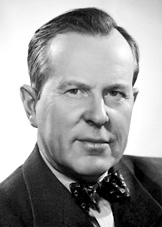
Nobel Peace Prize Winners, part one. Lester B. Pearson may have saved the world

Copyright © The Nobel Foundation [1]

Lester B. (Mike) Pearson was the 14th Prime Minister of Canada (from 1963 to 1968). He was also a First World War Veteran, a diplomat, an academic, a semi-pro athlete, a politician and a passionate advocate (and partial creator) of U.N. peacekeeping missions.

He received the Nobel Peace Prize in 1957 for the role he played in defusing the Suez Crisis. From the Award Ceremony Presentation Speech by Gunnar Jahn, Chairman of the Nobel Committee:

Never, since the end of the last war, has the world situation been darker than during the Suez crisis, and never has the United Nations had a more difficult case to deal with. However, what actually happened has shown that moral force can be a bulwark against aggression and that it is possible to make aggressive forces yield without resorting to power. Therefore, it may well be said that the Suez crisis was a victory for the United Nations and for the man who contributed more than anyone else to save the world at that time. That man was Lester Pearson.
….
snip….
During the Hungarian Revolution Lester Pearson spoke at the emergency special session of the General Assembly. He strongly advocated that an independent international authority should «enable all the Hungarian people, without fear of reprisal, to establish a free and democratic government of their own choice». «Why», he asked, «should we not now establish a suitable United Nations mission for Hungary when it has been agreed to form a United Nations authority in the Middle East?»
[2]

Pearson was an always civil yet very effective negotiator who managed to get a tremendous amount done as Prime Minister without his party ever holding the majority of seats in Parliament. The Medical Heath Care Act of 1966 brought universal health care to Canadians. In the same year the Canadian Pension Plan was established.

Tens of thousands of Canadians live healthier, happier lives because of the work of Mike Pearson. Pearson worked to stop the bombing of Cairo and supported the right of Hungarians to control their own country.

A diplomat, a negotiator, a supporter of peace, an architect of universal health care and pension plans.

A good Canadian, a good citizen of the world and, therefore by the standards of LaHaye and Jenkins (Left Behind) an antichrist.

[1] \”The Nobel Peace Prize 1957\”. Nobelprize.org. 4 Sep 2011 http://www.nobelprize.org/nobel_prizes/peace/laureates/1957/

[2] \”The Nobel Peace Prize 1957 – Presentation Speech\”. Nobelprize.org. 4 Sep 2011 http://www.nobelprize.org/nobel_prizes/peace/laureates/1957/press.html